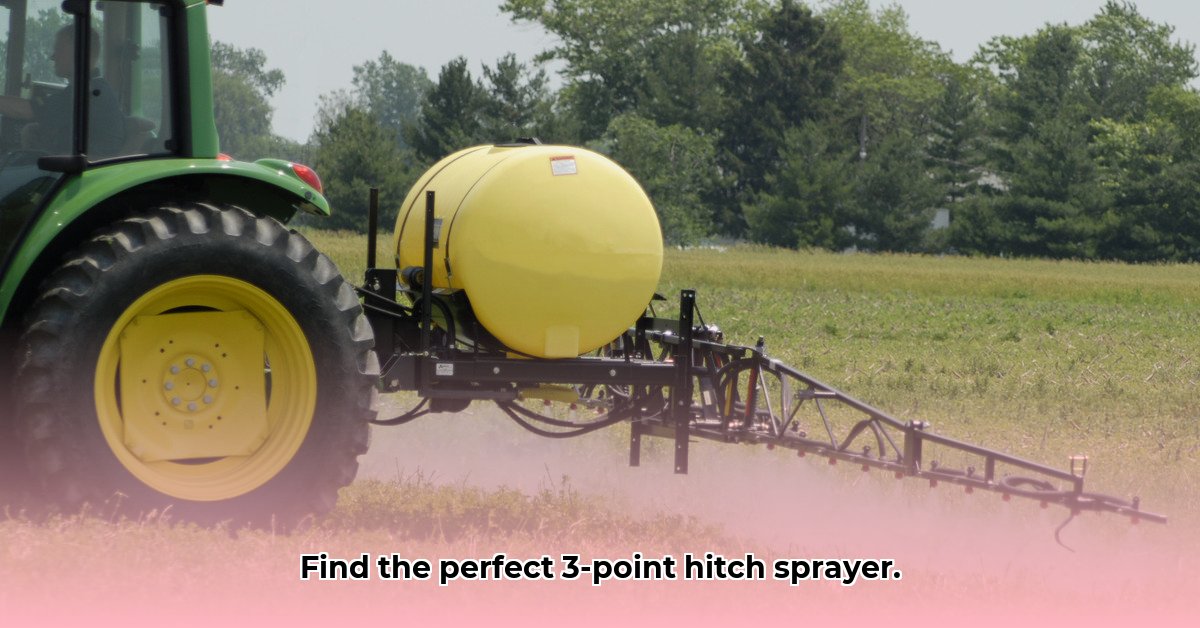
Choosing the right 3-point hitch sprayer is a critical investment for any farmer. This buyer's guide will help you navigate the complexities of sprayer selection, ensuring you choose a model that optimizes your efficiency, protects your crops, and fits within your budget. We'll cover key features, compare pump types, examine boom configurations, and discuss essential maintenance practices. For more detailed sprayer information, check out this helpful resource: Sprayer resources.
Key Factors to Consider When Choosing a 3-Point Hitch Sprayer
Several crucial factors influence your sprayer selection. Let's explore them in detail.
1. Tank Capacity: Optimizing Efficiency for Your Farm Size
Tank size directly correlates with your farm's scale and spraying needs. Larger tanks (100 gallons or more) reduce refill trips, saving valuable time, particularly beneficial for large acreage. However, smaller tanks (30-50 gallons) offer increased maneuverability in tight spaces and are ideal for smaller farms or specialized applications. Consider your typical spraying workload to determine the optimal balance between efficiency and handling ease. What size tank best accommodates your operational needs and minimizes downtime?
2. Pump Type: PTO vs. Electric – Power and Convenience Trade-offs
The choice between a Power Take-Off (PTO) pump and an electric pump involves a trade-off between power and convenience. PTO pumps, powered directly by your tractor's engine, provide consistent, high-pressure output, ideal for large booms and demanding applications. However, they are typically noisier. Electric pumps, powered by your tractor's electrical system or a separate battery, offer quieter operation and increased convenience. They may limit spraying power in high-pressure situations or when using heavily viscous solutions. Do you prioritize consistent high pressure or quieter, more convenient operation?
3. Boom Configuration: Maximizing Coverage and Maneuverability
Boom configuration significantly impacts spraying efficiency and ease of use. A simple wand is suitable for spot-treating or small areas. Folding booms offer maneuverability, easily collapsing for transport and navigating tight corners. Boom width directly influences coverage speed—a wider boom covers more ground faster but can be challenging to manage in smaller fields. Proper nozzle selection is crucial for uniform spray distribution regardless of boom type. What type of boom best suits your field conditions and spraying needs?
4. Material and Durability: Ensuring Longevity and Reducing Maintenance
Tank and boom materials directly impact sprayer lifespan and resistance to corrosion. Stainless steel offers superior durability and corrosion resistance, particularly important when working with corrosive chemicals. Polyethylene is a more budget-friendly option but may be less resistant to chemical degradation. Fiberglass offers a balance between cost and durability. Consider your typical chemical usage and climate when evaluating material options. How will the chosen materials impact the longevity and maintenance requirements of your sprayer?
5. Safety Features: Protecting Yourself and the Environment
Safety features are paramount. Look for pressure relief valves to prevent dangerous pressure buildup, automatic shutoff mechanisms to stop spraying if the boom is accidentally lifted, and clearly visible pressure gauges. Check for compliance with all relevant safety regulations. What safety features are non-negotiable for your operation?
6. Budget: Considering Total Cost of Ownership (TCO)
The initial purchase price is only part of the equation. Factor in ongoing costs like maintenance (greasing, cleaning), potential repairs, and the cost of chemicals. A higher initial investment in a robust sprayer might ultimately save money through reduced downtime and extended lifespan. How do you plan to balance initial cost with long-term cost savings?
Exploring Sprayer Models and Brands: A Research Guide
Due to limited publicly available comparative data, we can’t offer a definitive ranking of sprayer models. However, we recommend researching established brands like FIMCO, known for their wide range of sprayers and strong reputation.
Explore model specifications, paying close attention to pump pressure, nozzle types, and tank materials. Supplement your research by reading online reviews (from multiple, reputable sources), speaking with other farmers, and consulting with equipment dealers. Remember to always verify reviews and prioritize sources with demonstrable expertise.
Maintaining Your Sprayer: Maximizing Lifespan and Efficiency
Regular maintenance is essential for a long-lasting and efficient sprayer. Follow these steps:
- Pre- and Post-Spray Inspection: Inspect for leaks, loose connections, and potential issues before and after each use.
- Thorough Cleaning: Clean the tank and boom thoroughly after each use to prevent chemical buildup and corrosion.
- Regular Lubrication: Grease moving parts according to the manufacturer's instructions.
- Prompt Issue Resolution: Address any problems immediately to prevent them from escalating.
- Safety Checks: Regularly inspect all safety features to ensure they’re functioning correctly.
Conclusion: Making the Right Choice for Your Farm
Selecting the best 3-point hitch sprayer requires careful consideration of your individual needs and operational context. Prioritize safety, understand the total cost of ownership, research different models, and commit to regular maintenance. By following this guide, you can make an informed decision that enhances efficiency and supports the sustainability of your farming operation.